BEGIN seminar – Dr Markus Diesing

Date: Tuesday, 13th of January 2026, at 14:00 (UK Time)
Location: Online (MS Teams).
Leveraging machine learning to map organic carbon in surficial seabed sediments of the Norwegian continental margin
Abstract:
Continental margin sediments play an important role in the global carbon cycle, burying an estimated 279 Tg of organic carbon annually and storing 360 Pg in the upper 1 metre of the sediment column. The transfer of organic carbon from the fast-cycling surface to the slow-cycling geological carbon cycle regulates the concentration of carbon dioxide (CO2) over geological timescales. Over shorter timescales, the disturbance of organic carbon stored in surface sediments through human activities such as mobile bottom fishing might lead to reductions in organic carbon stocks, CO2 emissions to the atmosphere, a reduced buffering capacity of the ocean, and increased ocean acidification. Management of human activities in a way that they do not compromise the climate regulating function of continental margin sediments requires knowledge on spatial patterns and quantities relating to organic carbon accumulation rates, stocks and lability, but such detailed information is often missing. In Norway, these parameters were mapped as part of the ongoing national seabed mapping programme Mareano. We used a wealth of existing data collected over nearly 20 years and applied machine learning techniques to model and spatially predict how much and where organic carbon is accumulated and stored and how labile it is. These results were used to carry out a regionalisation using unsupervised classification with the aim to identify distinct seabed areas with regard to organic carbon. We identified areas that are likely vulnerable to human activities and those that are relatively robust to physical disturbance from an organic carbon perspective. These results might be used in the ecosystem-based management of marine areas in Norway.
Recording:
Bio:
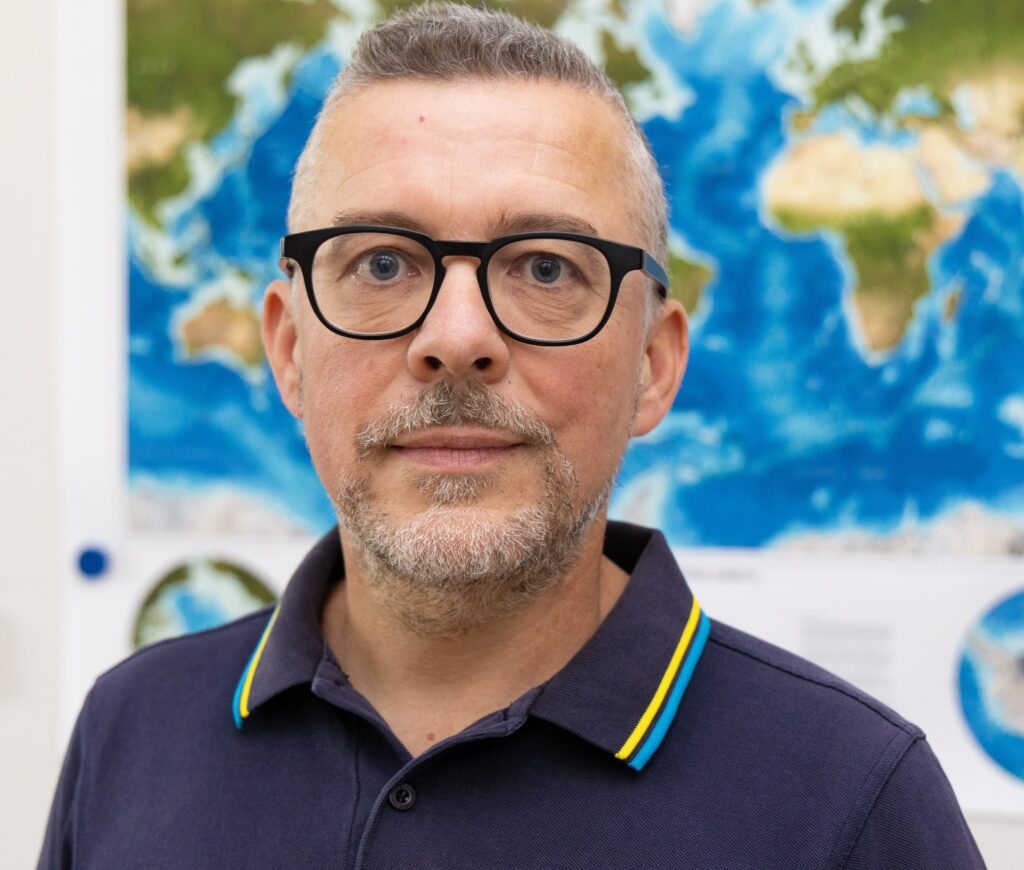
Markus Diesing is a marine geologist with a PhD from Kiel University (Germany), currently based at the Geological Survey of Norway in Trondheim. He has been active in the field of seabed mapping, from survey planning to data processing and the integrated analysis of datasets, for more than 25 years. In recent years, his focus has shifted to the development of robust, repeatable, and validated mapping techniques using machine learning methods. Current research interests include the quantitative spatial prediction of seabed sediment properties, understanding and quantifying the role of continental margin sediments in the marine organic carbon cycle and the spatial modelling of the occurrence of cold-water coral carbonate mounds in Norwegian waters.